
How cars from the US are better than cars from Europe

No matter how creative you are, there are only a few ways to buy a quality car. The first is buying a new vehicle if your budget allows it. The second option is the only alternative here and that is buying a used car. And people who want to get their money’s worth are increasingly turning to used cars from America.
Of course, you can buy a low mileage car with no damage or requiring inexpensive repairs in other places besides the US or Canada. The European market also offers many options. But which choice is more lucrative – a car assembled for America or Europe? Let's try to figure it out with the help of Columbus experts who specialize in assistance with car delivery from America.
First of all, cars of the same model produced for the US and European market may have their differences. This is due to different vehicle requirements by the two global regulators - the US Federal Department of Transportation (DOT) and its EU equivalent.
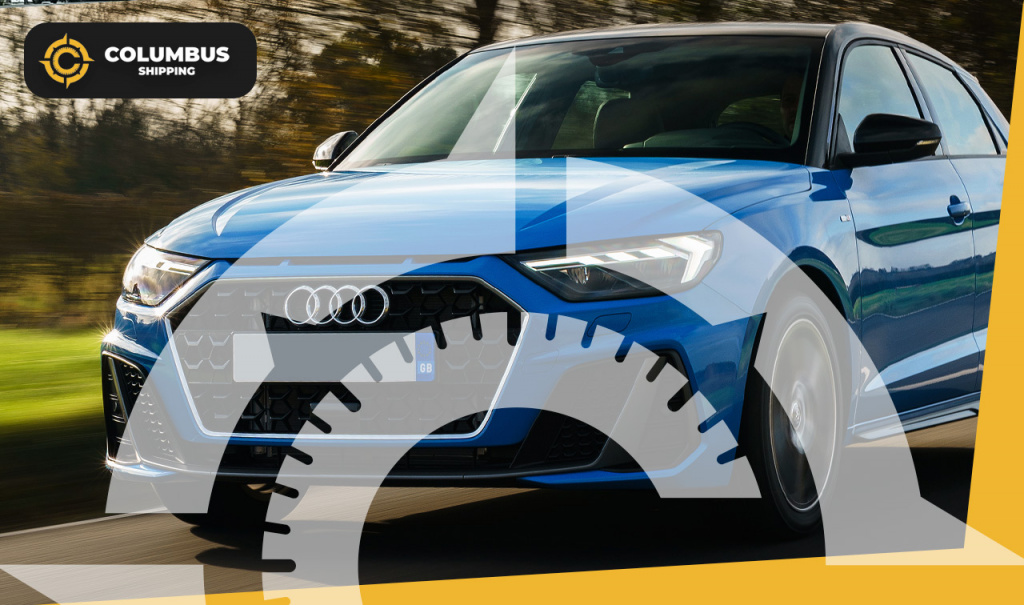
Model difference in cars made for America and Europe
The automobile preferences of Americans and Europeans are historically different. Cars driven by Americans tend to illustrate their way of life while Europeans tend to consider cars more as a means of transportation.
The most common trends are as follows - Americans prefer large, durable, and comfortable cars whereas Europeans are proud of the design of their cars but also pay attention to their practicality, giving preference to compact cars that can be easily parked on the narrow streets of Old World cities.
Basically that is the reason for the absence of European Class A and B cars on American roads. You are unlikely to see an economical Audi A1, VW Polo, Mercedes B class, BMW 1 series with 1.2-1.4 liter engine, or any Opel in the US. These “beetles” simply do not correspond to the American idea of what a car should be, and Americans are not used to saving on gasoline yet.
Americans are also not big fans of buying station wagons while in Europe the Passat station wagon sells twice as well as the sedan. The reason is that there are plenty of spacious vehicles in the US that are superior in comfort to the "ridiculous” cars that come with an additional rear door.
The United States switched to automatic transmission long ago, since it requires less effort from the driver; in Europe they continue to produce cars with mechanical transmission since it is believed that it provides better mileage.
As a rule, European cars are faster. This is due to the fact that EU autobahns allow you to do 130 km/h, or even have no speed limits, while American laws limit the speed to 120 km/h. For example, country roads and highways in the US mostly have a speed limit of 55 mph (88 km/h) and sometimes 65 mph (104 km/h). On the freeways you can get up to 70 and 75 mph (112 and 120 km/h) but no more.
At the same time, the “Americans" are more powerful. A 250 hp engine - usually atmospheric and therefore reliable – won’t stand out in the US.

Detailed differences
The US and European regulations for lighting, safety and emission control equipment are not identical. Let's take a look at how this affects purchasing a car.
1. Yellow turn signals are not required in the United States.
The turn signals on cars produced for the US market are red, and the parking lights are yellow. Europe has adopted a different standard - the color of the front marker lights should be white, and the rear ones red.
Rear fog lights are mandatory in Europe but they are not fitted onto vehicles in the US.
Therefore when importing a car from the US, you need to bring the external lights in line with the EU legislation. You won’t have any issues with that if you turn to Columbus experts for help at any stage of certification or repair.

2. American speedometers and odometers display data in US customary units.
Mileage and speed are displayed in miles, not kilometers. Temperatures are provided in Fahrenheit, not Celsius. However new cars allow you to switch to a preferred system with just a click of a button.

3. Aspherical side mirrors are fitted onto European vehicles but are banned in the US by the National Highway Traffic Safety Administration (NHTSA).
Only slightly convex right hand side mirrors are allowed. You can always replace them in Europe if you wish.
4. There was a time when US cars had only the advanced two-stage airbags installed on them but it is now irrelevant.
In addition, American cars are equipped with tires that correspond to the DOT standards. It means nothing in Europe however owners of large SUVs around the world do appreciate real American rubber.
5. The US emission standards for gasoline powered vehicles are defined by the California Environmental Standard (the strictest one).
Overall it coincides with Euro-5 standards, so American cars have no problems passing all European eco-tests.
Moreover, it is the exporters of European cars that are forced to adapt their cars to the strict legal requirements of the United States. For example, an Alfa Romeo 4C made for Europe weighs 895 kg while the one for the US is 1,050 kg due to additional equipment that improves the environmental performance of the internal combustion engine and exhaust system.
The diesel eco standards in the US are much stricter than in the EU and that is the reason why there are practically no passenger cars with this engine type in America.
6. Passive safety requirements for cars in America are also tougher compared to Europe.
In particular, installing elements that absorb the shock in case of an accident is obligatory - L-beams inside the doors, windows made of special glass that prevent the roof from collapsing during a rollover, etc.
As you can see, in some cases, US legal requirements for cars are stricter than European ones, and in others less so. One thing is certain - used cars from America are usually on top in everything related to comfort and quality of interior and all kinds of features that car owners love to add – high quality stereo system, luxury rims, exclusive body kit, etc.
Сolumbus is here for you when you need advice
Other differences between "Americans" and "Europeans" are gradually disappearing. And this is not surprising since, for example, the VW Golf is produced in Germany as well as in Mexico. The Honda Accord is the car with the highest ratio of American parts - the seats are made in East Liberty, Ohio, and the suspension is made in Greensburg, Indiana.
A car made for Europe may have the latest infotainment system and virtual cockpit but lose out in interior quality or steel grade used for the body.
In any case, you need to consider a specific car offered for sale at an auction. Columbus experts with many years of experience in the global market of used cars will help you properly assess the vehicle’s pros and cons.
Naturally, the car’s appearance and technical characteristics is the first thing we look at. After that begins painstaking work of checking the vehicle’s operation and accident history, mileage and so on. Then damages (if any) are studied and the cost of car repairs, its delivery, customs clearance, and certification is calculated.
We only recommend a car to our customers after making sure that the purchase is lucrative.


Help in the service