
Minivan or SUV: Which is Best as Family Car?
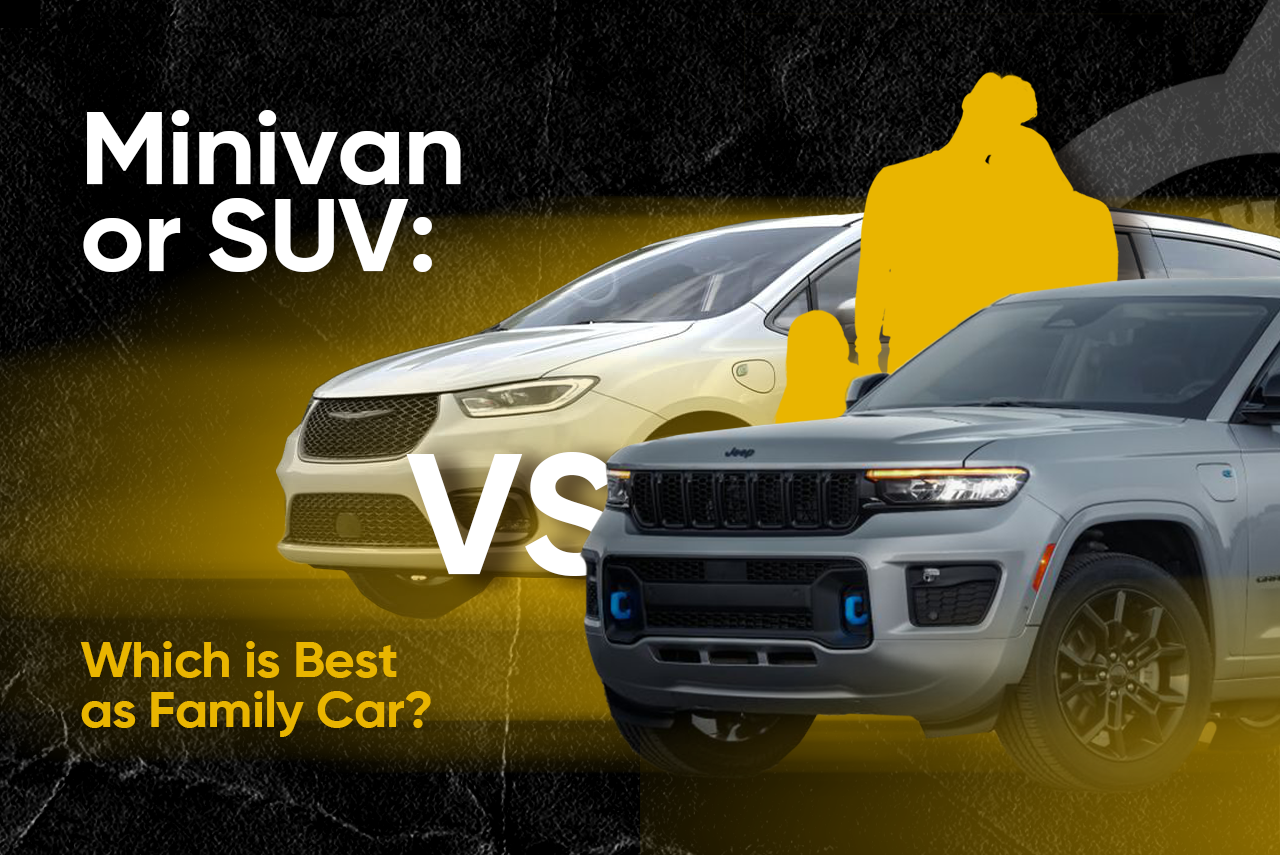
American minivans and SUVs look a little bit alike on the outside but due to transmission peculiarities, they drive, handle and even brake differently. Their cabins are also different in terms of capacity and the fuel efficiency is definitely not the same. So which of these cars should you choose for a family car? Let's listen to what Columbus experts have to say.
There are a lot of “family” cars on the American market, but usually it comes down to a choice between mid-size two-row crossovers, their full-size three-row cousins, SUVs of all sizes and stripes, and America’s family icon – minivans.
In terms of capacity, minivans and SUVs – and occasionally three-row crossovers - are most suitable for the role of a family car.
Each type of car has its own pros and cons, so picking the right one for your family depends on a number of things.
Let's look at the car criteria that will help you make the right choice.
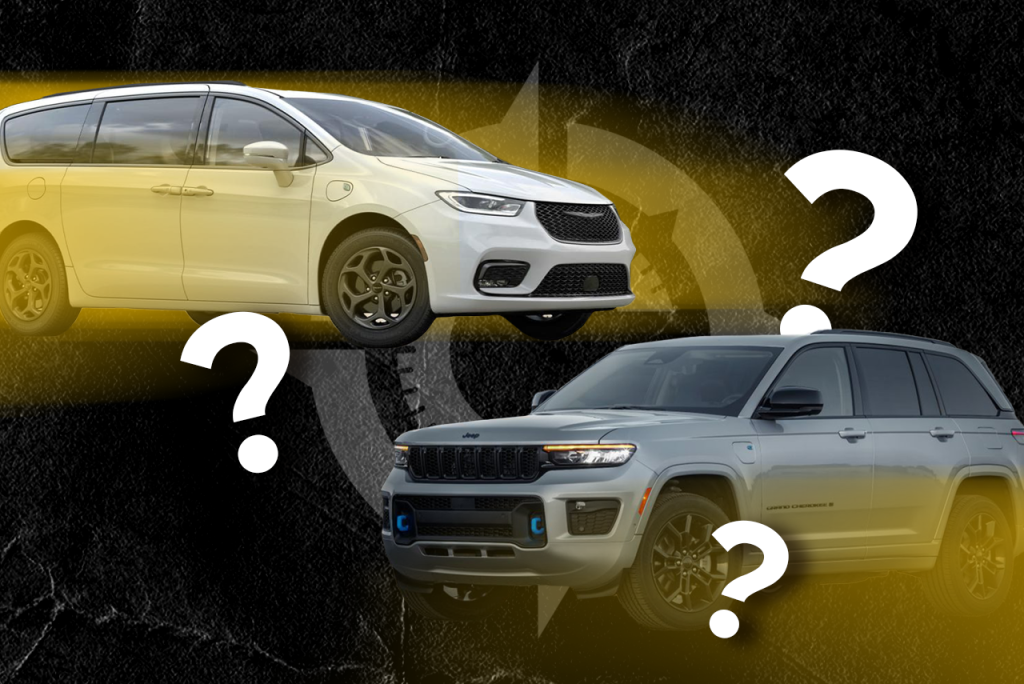
Crossovers vs Minivans: key differences
Minivans and SUVs are built on platforms that have little in common with each other.
Let's start with American SUVs. These are the successors to the pickup truck: automakers took the frame of a light truck and mounted a box body on it with one or two additional rows of seats.
Although progress does not stand still, the new generation of American SUVs retains the habits of their clumsy ancestors: a frame design (although there are still exceptions like the Jeep Grand Cherokee), the engine power, off road capabilities, and impressive dimensions.
Due to their size, SUVs can easily accommodate large cargo and up to 8-9 passengers. But these cars also have a downside: gas guzzling engines, parking issues, and not the best braking and handling.
Minivans do not have these problems because they are built on a passenger platform rather than a cargo platform. Front-wheel drive is considered standard, although all-wheel drive ones exist as well on models like the Toyota Sienna and Chrysler Pacifica, and dimensions are significantly smaller than those of SUVs.
The latter has a positive effect on handling, braking and makes parking easier. Traveling in a minivan feels close to traveling in a passenger car and is much cheaper than doing so in an SUV. However, with fuel savings, you need to forget about a powerful engine.
The two types of vehicles have something in common: a set of electronic assistants and active safety systems.
Minivans: main features
A minivan, unlike crossovers and SUVs, is not a really fashionable car. This is a purely utilitarian vehicle, and in this regard it has no equal. In an effort to increase the practicality of minivans, engineers have come up with several clever devices that we will discuss below.
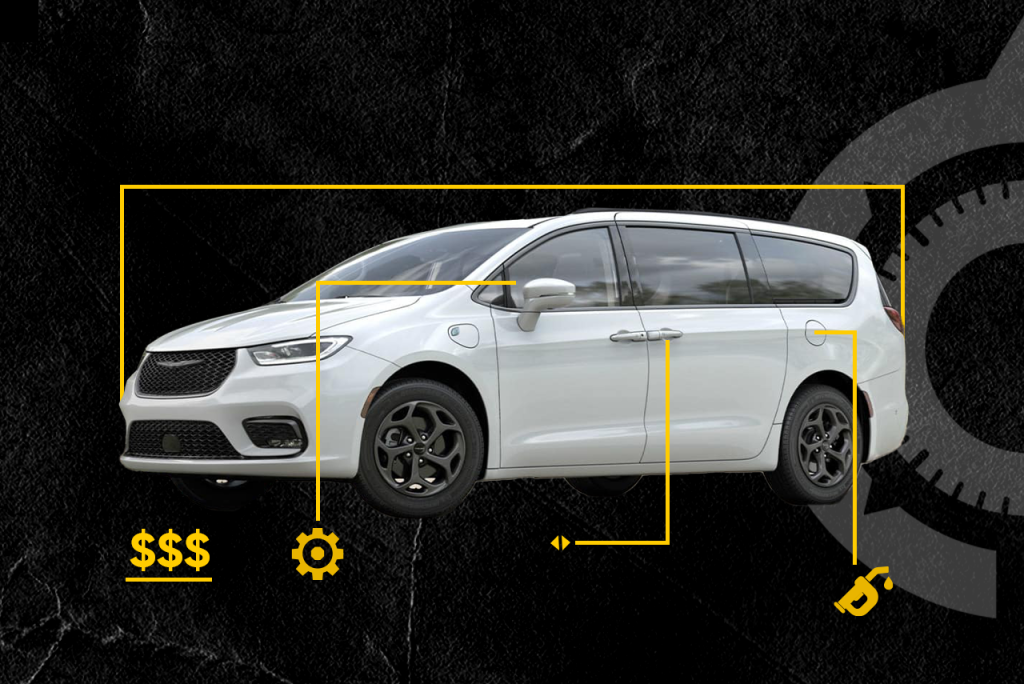
• Interior size and body design
By practically depriving the minivan of the hood and pushing the body as far forward as possible, the engineers achieved a significant increase in the interior space of the car, which no SUV or crossover can compete with - even three-row giants like the Chevrolet Suburban and Ford Expedition.
Just fold down the second and third rows of seats and you will see. If you do this in the Suburban, you get 3,398 liters of cargo space. And with the Chrysler Pacifica minivan you will get 3,979 liters. And keep in mind that the Pacifica is shorter than the Chevy by over half a meter.
Minivans also often offer more legroom, especially in the third row, compared to even the largest SUVs.
And on top of it all, modern minivans are becoming more and more similar to crossovers and SUVs. Look at the Kia Carnival, for example. The manufacturer positions it as a multi-purpose car, but the rectangular body of the Carnival looks suspiciously like a very long crossover. And that is in fact the base that was used to create it - the platform is the same as the Kia Sorento’s.
• Fuel efficiency
Minivans are more efficient and compact compared to SUVs. At the same time, they can accommodate more passengers than a full-size SUV, and their fuel consumption is comparable to mid-size crossovers.
The hybrid Toyota Sienna has a tiny appetite for fuel - below 6.5 L/100 km. The Chrysler Pacifica is available as a plug-in hybrid with fuel consumption of up to 8 L/100 km. The car can travel 50 km on electric power.
Even standard V6 gasoline engines from Honda, Toyota, Kia and Chrysler are more fuel efficient than those found in traditional SUVs. For example, the Honda Odyssey takes 8.5 liters on the highway and 10.5 liters in the city.
• Sliding passenger doors
Another important difference and at the same time a pro for the minivan is the sliding rear doors. You won't find them in crossovers or large SUVs. Meanwhile, they are convenient because they increase the doorway, making it easier to load things and for passengers to get on or get off, especially in tight parking lots.
Considering that many minivans have seats that can be removed or folded down completely – like Chrysler's Stow and Go system, which hides the seats into the floor – you've got the perfect solution for transporting bulky items.
Many minivans in the US have power rear doors that can be controlled directly from the driver's seat by pressing a button – another item for the pro column.
• Unique features
The latest minivans offer features designed specifically for family vehicles. Some of them are unique even for their class.
For example, Chrysler and Honda offer a built-in car vacuum cleaner. Or take the intercom system in the Toyota Sienna for easy communication between rear passengers and the driver.
Rear seat entertainment systems are available in almost every minivan, and Chrysler even has games and educational applications for the kids.
Minivans tend to have more seating capacity than three-row SUVs. And there are more options for using the seats - they can be folded, unfolded, and removed.
For example, the second row seats in the Kia Carnival can rotate 180 degrees, while the central one can be folded into a table or removed altogether.
• Price
SUVs are typically much more expensive than minivans, especially when new; prices for SUVs start at $50 thousand. To spend the same amount on a new minivan, you will have to stuff it with a whole lot of extras or get an exclusive body kit, since the cost of minibuses in the US starts at $30 thousand. Thus, the minimum cost of the Kia Carnival is $33,200, and the Toyota Sienna – $37,185.
The Chrysler Pacifica and Honda Odyssey are more expensive, but even with all the bells and whistles they will cost less than $50 thousand.
SUVs: main features
The minivan is a champion in practicality, but the SUV is only slightly inferior. And it is certainly capable of doing things that a minivan cannot. This is a workhorse of a different kind, intended primarily for towing or traveling on bad roads.
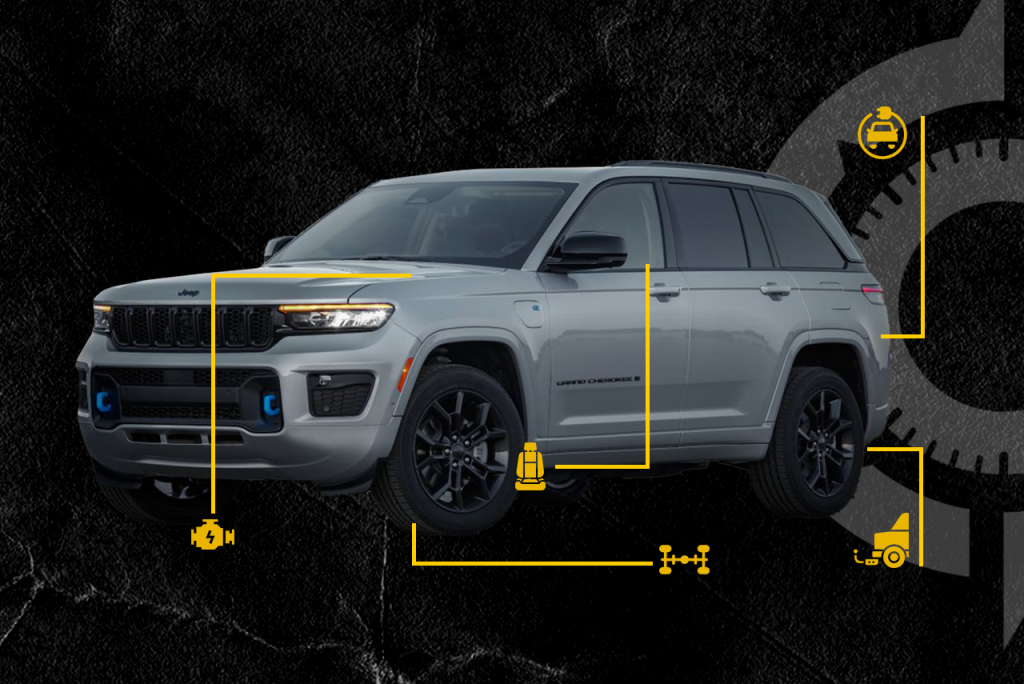
• Towing capabilities
A minivan won't be much help in towing your boat or camper. If you need to move a load weighing 2 tons from point A to point B, you will need an SUV. The frame design and powerful V8 engine is just what you need for the occasion.
Chevy Tahoe, Ford Expedition, GMC Yukon, Nissan Armada и Toyota Sequoia могут легко буксировать за собой от 2,5 до 4 тонн.
The Chevy Tahoe, Ford Expedition, GMC Yukon, Nissan Armada and Toyota Sequoia can easily tow between 2.5 and 4 tons.
More popular and smaller SUVs like the Ford Explorer and Jeep Grand Cherokee will also outshine any minivan. For example, the Dodge Durango can easily tow 3.9 tons, the Grand Cherokee can tow up to 3.2 tons, and the Nissan Pathfinder and Ford Explorer can handle 2.7 tons.
• Engine power
Thanks to a wide selection of engines to choose from, you can pick an SUV tailored to specific tasks.
Turbocharged four-cylinder engines come standard in the Ford Explorer, V8 engines are optionally available in the Chevrolet Tahoe and Suburban, and you can get a twin-turbocharged V6 engine in the souped-up Ford Expedition.
In addition, there are some very fast SUVs that can leave some sports cars in the dust. A typical example is the Jeep Grand Cherokee Trackhawk with a 707-horsepower engine.
A bit lower on the ladder are the 475-horsepower Dodge Durango SRT and the mid-size Ford Explorer in the ST configuration with a 400-horsepower engine.
• Editions
Like minivans, many top-trim three-row SUVs come with second-row captain's chairs. In addition to added comfort, these seats provide easy access to the third passenger row. For example, these are installed in the Kia Telluride, Honda Pilot and Toyota Highlander.
• All-wheel drive
Full-size SUVs have earned a reputation for practicality thanks to their off-road capabilities. 4-wheel drive means a lot when you're off-road. Sometimes, if you live in the country, an SUV is simply a must.
Some SUVs, like the Jeep Wrangler and Toyota 4Runner, are powerful vehicles that perform well on the toughest trails.
The “big guys” like Tahoe and Expedition will not pass the test of serious off-roading but they will comfortably transport passengers over potholed dirt roads.
In rain and mud, any, even the most shabby, SUV with good ground clearance is better than a minivan.
• Fully electric
The Chrysler Pacifica Hybrid is a plug-in hybrid and the only electric minivan. But if you're looking for an electric vehicle among SUVs, there are many more choices: the Kia EV6, Ford Mustang Mach-E, Tesla Model X, Subaru Solterra. And the electric variety continues to grow.
• Luxury
If you're looking for something special among minivans, you can get a pumped-up Sienna or Pacifica with a price tag of $50 thousand or more. These are really nice cars, but if you want real luxury, you got to look among SUVs.
You got the Lincoln Navigator and Cadillac Escalade, Mercedes G-Class and slightly less powerful GLS, Porsche Cayenne and Tesla Model X, and for the top of the line – the Bentley Bentayga, Rolls-Royce Cullinan and Lamborghini Urus. There is no shortage of luxury SUVs.
So which is better?
Apart from being able to carry 8-9 passengers with all their belongings, there is little in common between a minivan and an SUV.
One is more compact and more efficient but completely useless off-road while the other is huge, very angry and, regardless of the price tag, is ready to dive dig up dirt; one can carry heavy loads, the other one saves a pretty penny on gasoline.
Which one to choose?
If you are looking to tow things, you value interior luxury and a powerful engine under the hood, go with an SUV. Until a minivan that can tow at least 3-4 tons and produce 700 hp is made, an SUV is indispensable. And yes, you can’t take away its charisma, which is so lacking in docile minivans.
However, there is no doubt that the minivan is more suitable as a family car. This is the best choice for parents who have several children. It is convenient and it will make your life easier!
Sources: iSeeCars.com, Motortrend.com


Help in the service